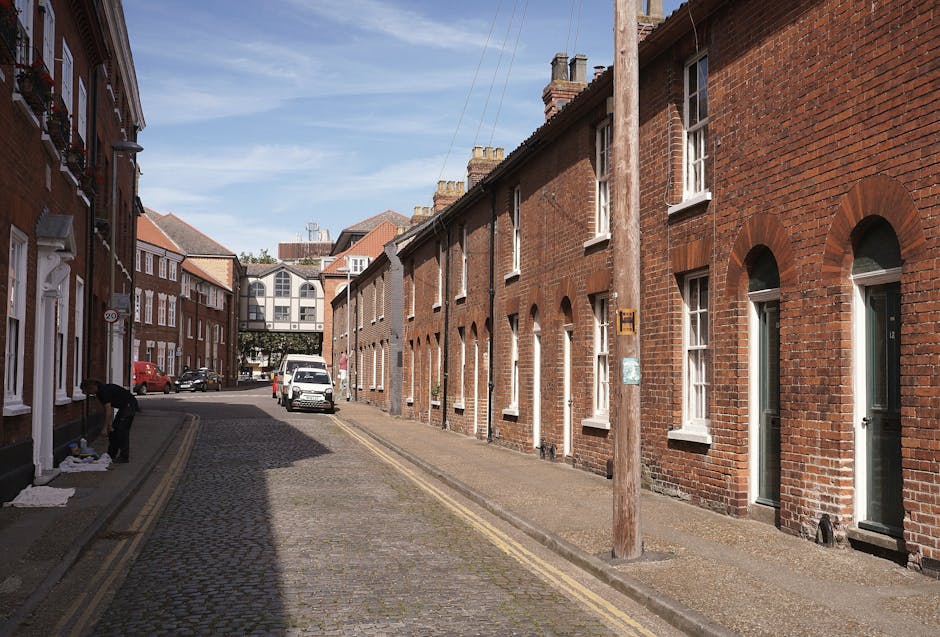
Uxbridge man with van for narrow street access problems

Narrow streets can turn a simple move into a bit of a puzzle. One parked car, a tight bend, a low wall, or a row of front gardens with no room to swing a larger vehicle in, and suddenly the whole job feels harder than it should. If you are dealing with Uxbridge man with van for narrow street access problems, the real challenge is not just getting belongings from A to B. It is getting them out safely, quickly, and without damaging property, vehicles, or tempers.
That is where a man and van service becomes genuinely useful. In the Uxbridge area, with its mix of residential streets, older layouts, terraced roads, mews-style access, and busy parking conditions, smaller vehicles and careful handling often matter more than brute force. This guide explains how the service works, why it matters, who it helps most, and what to check before you book. No fluff. Just the practical stuff that saves time on the day.
If you have ever looked at a street and thought, How on earth is a van meant to fit there?, you are in the right place.
Why Uxbridge man with van for narrow street access problems Matters
Narrow access changes everything. A move that looks straightforward on paper can quickly become awkward once you factor in tight turning circles, parked cars, bin day, low branches, residents coming and going, and streets where a large Luton van would be an overconfident mistake. In Uxbridge, that kind of access issue is not unusual. Parts of the area combine older housing stock with modern traffic pressure, which means the smartest solution is often not the biggest vehicle, but the most suitable one.
A man with a van service is designed for exactly this kind of setting. Smaller vans are easier to position near front doors, around corners, and along roads where a larger removal lorry would block traffic or simply not fit. That matters for speed, but also for safety. Less distance carrying items means less chance of bumps, scuffs, and dropped boxes. It also reduces the stress of trying to guess whether the van can reverse into a gap without making a small drama out of the day. Let's face it, nobody wants that.
The issue is not just the vehicle size. It is the whole approach. A good operator thinks about access before arrival, checks loading options, plans the order of the work, and adjusts for the street rather than forcing the street to suit the vehicle. That kind of judgement is what separates a smooth move from a messy one.
Expert summary: In narrow-street jobs, the best result usually comes from careful planning, a smaller vehicle, and an operator who understands local access constraints. The job feels easier because the logistics are easier. Simple as that.
How Uxbridge man with van for narrow street access problems Works
The process is usually simpler than a full removals service, but it still needs thought. In most cases, you start by explaining the access problem clearly: the street width, parking restrictions, any turning issues, whether the property is on a terraced road, whether there is a shared driveway, and how far the van can realistically get to the entrance. The more honest the description, the better the plan.
From there, the operator chooses the most appropriate vehicle and loading method. For a narrow lane or tight Uxbridge cul-de-sac, that may mean a compact van rather than a long wheelbase vehicle. For a job with awkward stair access or a front gate that barely opens fully, it may also mean bringing trolley equipment, blankets, and straps so items can be moved efficiently without cluttering the pavement.
On the day, the van is positioned where access is safest and least disruptive. Sometimes that is right outside. Sometimes it is not. A good driver knows when a slightly longer carry is actually the better option because it avoids blocking neighbours, buses, or a bend in the road. Then items are loaded in a practical order: heavier objects first, fragile items protected, loose things secured. It sounds obvious, but under pressure, obvious things get forgotten. Rather annoying, really.
If the route involves multiple stops, local collections, or a mix of pickup and delivery points, the service can be adjusted to fit that pattern too. That flexibility is one of the reasons people choose a man and van over a larger removal team when access is the main headache rather than the volume alone.
Key Benefits and Practical Advantages
The value of this kind of service is not just that it "fits" where a bigger van might struggle. It is the ripple effect that comes with a better fit. Small access jobs tend to be less disruptive, less time-sensitive in the wrong way, and less likely to create unnecessary complications.
- Better access to tight streets: Smaller vans can often get closer to properties with limited road width or awkward parking.
- Less carrying distance: When the van can park nearer, you spend less time walking back and forth with boxes, furniture, or appliances.
- Lower risk of damage: Shorter carries and more controlled loading usually mean fewer knocks to walls, doors, and items.
- More flexible scheduling: A man and van can often be more adaptable than a rigid large-lorry setup.
- Suited to mixed jobs: Ideal for single items, small flats, student moves, eBay collections, office kit, and awkward deliveries.
- Less street disruption: In busy Uxbridge roads, a smaller footprint can help avoid blocking neighbours or frustrating traffic.
Another benefit people sometimes overlook is peace of mind. When access is tight, you are not just paying for transport. You are paying for judgement. Can the van fit? Should it reverse in? Is there enough space to turn? Should the job be split into two runs? These little decisions matter more than people realise.
And to be fair, that is where a well-handled smaller move often feels smoother than a bigger one. Not because there is less to do, but because each part is easier to control.
Who This Is For and When It Makes Sense
This service is a strong fit for people who do not need a full-scale removals operation but still need careful handling and smart access planning. If that sounds like your situation, you are probably closer to the ideal customer than you think.
It is especially useful for:
- Residents on narrow terraced streets
- Flat moves with limited kerb space
- Students moving in or out of shared housing
- People collecting furniture from shops, storage, or private sellers
- Small office relocations
- Landlords and letting agents handling quick turnarounds
- Tradespeople moving tools, stock, or small equipment
It also makes sense if you are moving from a property with awkward frontage, shared access, or a road where stopping for too long would be a nuisance. That might mean somewhere busy near shops, a street with resident parking bays, or a narrow residential lane where two vehicles can barely pass comfortably.
There is a point where a larger removals team is the better choice, of course. If you have a substantial household load, multiple large items, or a long-distance move with strict timing, a bigger service may be more efficient. But for many jobs where access is the problem, not the volume, a man with van setup is a very sensible middle ground.
Step-by-Step Guidance
If you want the move to go well, the planning starts before anyone arrives at the address. Here is a clear way to approach it.
- Measure the access properly. Check the road width, any corners, height restrictions, parking restrictions, and whether a van can stop safely nearby.
- Take photos if needed. A few phone pictures of the street, entrance, or driveway can be more helpful than a long explanation.
- List the items clearly. Be honest about what needs moving. A wardrobe is not "just a box with doors", and a sofa is never as simple as people hope.
- Flag awkward items early. Pianos, glass tops, heavy desks, appliances, and oversized furniture need special handling or extra manpower.
- Choose the right time window. Mid-morning can be easier than school-run chaos or peak parking pressure. Sometimes a difference of one hour changes everything.
- Plan where the van can legally wait. If kerb space is limited, identify a sensible backup spot.
- Prepare the property. Clear hallways, protect flooring if necessary, and keep lift or stair access unobstructed.
- Pack for quicker loading. Boxes that are taped well and labelled clearly save a surprising amount of time.
- Confirm contact details. When streets are tight, a quick call or text can avoid confusion on arrival.
- Leave a little buffer time. Narrow-access jobs rarely go perfectly by the minute. A bit of flexibility helps.
A tiny detail can save the whole day. For example, if a van cannot park directly outside, knowing in advance which side of the street has the wider turning space makes a real difference. It sounds small, but these are the things experienced operators quietly care about.
Expert Tips for Better Results
If you want a narrow-street move to feel controlled rather than chaotic, a few habits make a big difference.
1. Lead with access information, not just item lists. People often describe what is moving but forget to mention where it is moving from. In a tight Uxbridge street, the access detail matters just as much as the load.
2. Photograph the tricky bits. A low brick wall, a tight gate, a steep drop at the kerb, or a sharp turn at the end of the road may not sound dramatic, yet they shape the whole job.
3. Don't assume the closest space is the best space. Sometimes the space that saves the most time is the one that gives the best loading angle, not the one nearest the door.
4. Keep the load simple and grouped. Mixed piles slow everything down. Separate what is fragile, what is heavy, and what needs to go first.
5. Give realistic timing. A job in a narrow street may take longer than the same move in an open cul-de-sac. That is normal, not a failure.
6. Ask about protective equipment. Blankets, straps, dollies, floor protection, and corner guards all help when turning space is limited.
7. Be open about parking risk. If a van may need to pause away from the front door, say so. It is better to plan around the problem than pretend it does not exist.
One small but useful tip: if the street fills with parked cars by late afternoon, a morning slot can save you a lot of faffing about. You know the kind of thing - you arrive ready to work, and the road has decided to become a car park. Not ideal.
Common Mistakes to Avoid
Most access problems are made worse by avoidable mistakes. The good news is that they are easy to sidestep once you know what to watch for.
- Understating the access challenge: "It should be fine" is not the same as "the van can safely stop here."
- Booking the wrong size vehicle: Bigger is not always better. In a narrow street, oversized can mean slower and riskier.
- Forgetting parking restrictions: A good vehicle is no help if it cannot stop legally or safely.
- Leaving items unprepared: Loose parts, broken-down furniture, and unsealed boxes create delays.
- Ignoring stair or doorway widths: The road may be manageable while the hallway is the real bottleneck.
- Not allowing for neighbours and traffic: A considerate job keeps everyone calmer, including you.
- Waiting until the last minute to mention awkward items: That is how jobs become frustrating.
A lot of people make the mistake of focusing on the van and forgetting the path from the van to the door. Truth be told, that short stretch is often where the job is won or lost.
Tools, Resources and Recommendations
You do not need a warehouse full of kit, but the right tools make a narrow-access move much easier. A practical operator will usually rely on a sensible mix of lifting and protection equipment.
| Tool or resource | Why it helps | Best used for |
|---|---|---|
| Furniture blankets | Protects items and door frames from knocks | Sofas, cabinets, white goods, tables |
| Straps and tie-downs | Keeps loads secure during transport | Mixed loads, tall items, heavier furniture |
| Hand trolley or sack truck | Reduces carrying strain | Boxes, appliances, storage collections |
| Floor protection | Helps prevent scuffs in hallways and entrances | Moves with tight stair or front-door access |
| Measuring tape | Checks widths before arrival | Doorways, gates, side access, vehicle gaps |
| Phone photos | Shows real street conditions quickly | Consultations and pre-job checks |
As a recommendation, keep your own basic move pack ready: tape, markers, bin bags, scissors, and a few old towels. They sound mundane, and they are, but that is often what helps when you are boxing things up late in the evening and the kettle is on in the background.
If you are comparing services, look for a provider that asks questions about access rather than only quoting from a list of items. That is usually a sign they have done this kind of work before and understand that narrow streets need a different approach.
Law, Compliance, Standards, or Best Practice
When a move involves narrow streets, roadside stopping, loading, or shared access, it is worth thinking about practical compliance as well as convenience. You do not need to become an expert overnight, but you should expect the work to be handled responsibly.
In the UK, normal road rules still apply. A vehicle should not block traffic unlawfully, create unnecessary obstruction, or stop in a way that puts people at risk. Parking restrictions, yellow lines, local restrictions, and access limitations need to be respected. In some places, loading may be allowed only within certain conditions, so it is sensible to check the local situation in advance rather than assume.
For residential moves, best practice usually means keeping disruption low, loading efficiently, and being considerate to neighbours, pedestrians, and other road users. If a property is on a very tight street, the operator should be realistic about how much room is needed and whether an alternative stopping point will be safer.
Insurance is another important consideration. You should expect a professional service to have suitable cover for goods in transit and public liability, although the exact scope can vary. It is sensible to ask what is included rather than assume. That is not being awkward. It is just sensible.
Health and safety matters too. Heavy lifting, awkward angles, stairs, and tight turns all increase the chance of strain or accidental damage. The right lifting technique, the right equipment, and a tidy loading area all contribute to a safer result. Small thing, big effect.
Options, Methods, or Comparison Table
Not every access problem needs the same solution. Here is a practical comparison of common approaches.
| Option | Best for | Strengths | Limitations |
|---|---|---|---|
| Compact man and van | Narrow streets, flats, small moves | Flexible, easier access, less street disruption | Limited capacity for very large moves |
| Large removals lorry | Big households, extensive inventories | High capacity, fewer trips for large loads | May struggle in tight roads or parking-constrained areas |
| Split-load approach | Mixed loads with difficult access | Can balance vehicle size and access needs | May take longer overall |
| Customer self-access plus loading help | Light moves with very limited street space | Useful where the van cannot stop directly outside | Requires more involvement from the customer |
In many Uxbridge narrow-street situations, the compact man and van option is the sweet spot. It is not always the answer, but it often is the most practical one. The key is matching the method to the street, not forcing every move into the same mould.
Case Study or Real-World Example
Picture a small flat move on a residential Uxbridge street where parking is tight and the road bends slightly near the property. A larger van would have to stop several doors away, which would mean more carrying, more trips, and more chance of snagging walls or bumping into parked cars. That is exactly the kind of job where a compact man and van setup makes life easier.
In a real-world scenario like this, the customer walks through the access points first, points out the gate width, and mentions that bins are usually collected on the same side of the road. That one detail matters. The operator then chooses a smaller vehicle, parks at the safest available point, and uses blankets and straps to protect a sofa, two beds, boxes, and a few kitchen items. Nothing dramatic. Just steady, sensible work.
Because the route from the van to the door is short enough and the vehicle is well placed, the move stays controlled. No panic. No need to drag heavy furniture around a corner that was never meant for it. The whole job feels calm, and that is often the real win in an access-limited move. Calm is underrated.
This sort of example comes up again and again: not a huge removal, not a tiny hand-carry job, just a smartly managed move in a street that does not make life easy. And that is precisely where a good local service earns its keep.
Practical Checklist
Use this checklist before your booking or move day. It keeps things simple and reduces avoidable stress.
- Have I described the street access clearly?
- Have I mentioned any parked-car pinch points, tight bends, or height restrictions?
- Do I know which items are fragile, heavy, or awkward?
- Have I checked whether parking or loading restrictions could affect the job?
- Are boxes sealed, labelled, and easy to stack?
- Have I measured doorways, gates, or stair access where needed?
- Do I have photos of the property or street if the layout is tricky?
- Have I allowed enough time for a slower, careful load?
- Do I know where the van can stop safely if the front door space is blocked?
- Have I prepared a backup plan in case access is tighter than expected?
If you can tick most of those off, you are already ahead of the game. Honestly, that alone prevents a lot of moving-day headaches.
Conclusion
Uxbridge narrow-street access problems do not need to derail a move. The right man with a van service turns a tricky parking or turning situation into something manageable, and often surprisingly smooth. The real advantage is not just vehicle size, though that matters. It is the combination of planning, local awareness, careful loading, and a practical approach to the street in front of you.
When access is tight, clarity helps. Good photos, honest descriptions, sensible timing, and the right equipment all make a visible difference. If you plan well and choose a service that understands these constraints, you can save time, reduce stress, and avoid the usual last-minute scrambling that nobody enjoys. Not even a little bit.
Get a free quote today and see how much you can save.
And if you are standing on a narrow kerbside wondering whether it will all fit, take heart. With the right setup, it usually does.
Frequently Asked Questions
What does a man with a van service do for narrow streets?
It provides a smaller, more flexible transport option that is easier to position in tight roads, making loading and unloading simpler when access is limited.
How do I know if my Uxbridge street is too narrow for a van?
Check whether vehicles can pass comfortably, whether parking blocks the road, and whether there is enough room for safe stopping and loading. Photos help a lot if you are unsure.
Should I choose a smaller van for tight access?
Usually yes, if the load fits. A smaller van is often easier to park and manoeuvre in narrow streets, which reduces disruption and the chance of damage.
What if the van cannot park right outside my property?
That is quite common. The job can still work if there is a safe nearby stopping point and the access route from van to property is manageable.
How much notice should I give about access issues?
As much as possible. The earlier you mention tight roads, parking restrictions, or awkward entry points, the better the plan will be.
Can a man and van help with single heavy items?
Yes. It is often ideal for sofas, appliances, wardrobes, desks, and similar items, especially when the street layout makes larger vehicles impractical.
Is this better than a full removal company for small moves?
Often it is, especially if the main issue is access rather than volume. For larger household moves, though, a full removals team may still be the better fit.
Do I need to measure doorways and gates?
If you have tight access, yes. A quick measurement can prevent avoidable problems on the day and helps the operator choose the right approach.
What items are hardest to move in narrow streets?
Large sofas, wardrobes, appliances, glass tables, and awkwardly shaped furniture are usually the trickiest because they are harder to carry and turn safely.
What should I prepare before the van arrives?
Pack boxes securely, clear walkways, separate fragile items, and make sure the driver knows where to stop and which access points are available.
Are there parking or loading rules I should worry about in Uxbridge?
Yes, local parking restrictions and road rules still apply. It is sensible to consider loading access carefully and avoid any plan that would block traffic or create a hazard.
How can I make the job quicker on the day?
Keep items grouped, label boxes clearly, share access photos in advance, and allow a bit of time flexibility. Small steps save real time when the street is tight.